[hen-ui-dynamic-experience placement=”aboveTheFold” /] [hen-ui-text variant=”b4″ class=”heading-4″]A student’s major can influence their education and career, but choosing the right major takes a lot of consideration. The decision depends on each learner and what they wish to get out of their education.[/hen-ui-text] [hen-ui-text variant=”b4″]Some students seek out the highest-paying college majors, while others might seek job security by choosing a high-demand field. As a helpful starting point, this page details some of the most popular college majors, along with expected coursework, potential career pathways, and prospective salaries for each.[/hen-ui-text] [hen-ui-heading variant=”h2″]Find the Right Major for You[/hen-ui-heading] [hen-ui-text variant=”b4″]Use our quiz to find the right major for you. Ready to learn more about your chosen degree or find top-ranked programs? Find links below![/hen-ui-text] 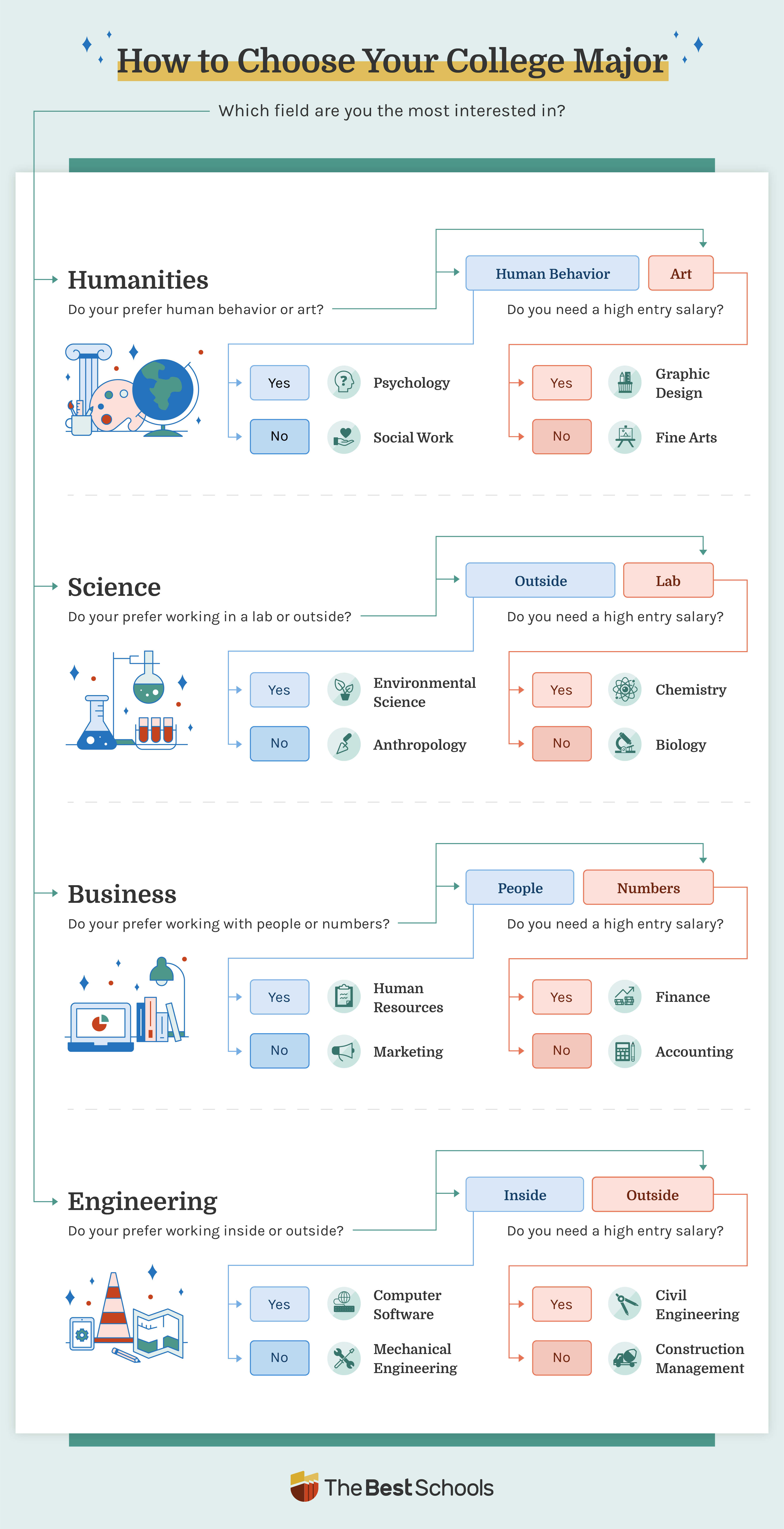 [hen-ui-heading variant=”h3″]Learn More About Your Chosen Major[/hen-ui-heading] [hen-ui-grid columns-md=”2″ gap=”xl”] [hen-ui-flex direction=”column” gap=”lg”] [hen-ui-expert-bio name=”Psychology” img-src=”https://res.cloudinary.com/highereducation/image/upload/c_fill,w_100/c_crop,w_100/v1597960856/TheBestSchools.org/how-to-choose-a-major/Psychology.png” img-alt=”Psychology” layout=”horizontal” background=”white” /] [hen-ui-text variant=”b4″ slot=”contentRight”][hen-ui-link href=”/degrees/psychology-degree/”]Psychology Degree Guide[/hen-ui-link] [hen-ui-link href=”/rankings/bachelors/best-online-bachelors-psychology/”]Best Online Bachelor’s Programs in Psychology[/hen-ui-link][/hen-ui-text] [/hen-ui-flex] [hen-ui-flex direction=”column” gap=”lg”] [hen-ui-expert-bio name=”Social Work” img-src=”https://res.cloudinary.com/highereducation/image/upload/c_fill,w_100/c_crop,w_100/v1597960856/TheBestSchools.org/how-to-choose-a-major/Social-Work.png” img-alt=”Social Work” layout=”horizontal” background=”white” /] [hen-ui-text variant=”b4″ slot=”contentRight”][hen-ui-link href=”/degrees/social-work/”]Social Work Degree Guide[/hen-ui-link] [hen-ui-link href=”/rankings/bachelors/best-bachelors-social-work/”]Best Bachelor’s Programs in Social Work[/hen-ui-link][/hen-ui-text] [/hen-ui-flex] [hen-ui-flex direction=”column” gap=”lg”] [hen-ui-expert-bio name=”Graphic Design” img-src=”https://res.cloudinary.com/highereducation/image/upload/c_fill,w_100/c_crop,w_100/v1597960856/TheBestSchools.org/how-to-choose-a-major/Graphic-Design.png” img-alt=”Graphic Design” layout=”horizontal” background=”white” /] [hen-ui-text variant=”b4″ slot=”contentRight”][hen-ui-link href=”/rankings/bachelors/best-online-bachelors-graphic-design/”]Best Online Bachelor’s Programs in Graphic Design[/hen-ui-link][/hen-ui-text] [/hen-ui-flex] [hen-ui-flex direction=”column” gap=”lg”] [hen-ui-expert-bio name=”Fine Arts” img-src=”https://res.cloudinary.com/highereducation/image/upload/c_fill,w_100/c_crop,w_100/v1597960856/TheBestSchools.org/how-to-choose-a-major/Fine-Arts.png” img-alt=”Fine Arts” layout=”horizontal” background=”white” /] [hen-ui-text variant=”b4″ slot=”contentRight”][hen-ui-link href=”/degrees/art-design-degree/”]Art & Design Degree Guide[/hen-ui-link] Best Online Bachelor’s Programs in Art & Design[/hen-ui-text] [/hen-ui-flex] [hen-ui-flex direction=”column” gap=”lg”] [hen-ui-expert-bio name=”Anthropology” img-src=”https://res.cloudinary.com/highereducation/image/upload/c_fill,w_100/c_crop,w_100/v1597960855/TheBestSchools.org/how-to-choose-a-major/Anthropology.png” img-alt=”Anthropology” layout=”horizontal” background=”white” /] [hen-ui-text variant=”b4″ slot=”contentRight”]Anthropology Degree GuideBest Online Bachelor’s Programs in Anthropology[/hen-ui-text] [/hen-ui-flex] [hen-ui-flex direction=”column” gap=”lg”] [hen-ui-expert-bio name=”Chemistry” img-src=”https://res.cloudinary.com/highereducation/image/upload/c_fill,w_100/c_crop,w_100/v1597960855/TheBestSchools.org/how-to-choose-a-major/Chemistry.png” img-alt=”Chemistry” layout=”horizontal” background=”white” /] [hen-ui-text variant=”b4″ slot=”contentRight”][hen-ui-link href=”/degrees/chemistry-degree/”]Chemistry Degree Guide[/hen-ui-link] Best Chemistry Programs in the World Today[/hen-ui-text] [/hen-ui-flex] [hen-ui-flex direction=”column” gap=”lg”] [hen-ui-expert-bio name=”Biology” img-src=”https://res.cloudinary.com/highereducation/image/upload/c_fill,w_100/c_crop,w_100/v1597960855/TheBestSchools.org/how-to-choose-a-major/Biology.png” img-alt=”Biology” layout=”horizontal” background=”white” /] [hen-ui-text variant=”b4″ slot=”contentRight”][hen-ui-link href=”/degrees/biology-degree/”]Biology Degree Guide[/hen-ui-link] [/hen-ui-text] [/hen-ui-flex] [hen-ui-flex direction=”column” gap=”lg”] [hen-ui-expert-bio name=”Human Resources” img-src=”https://res.cloudinary.com/highereducation/image/upload/c_fill,w_100/c_crop,w_100/v1598048687/TheBestSchools.org/how-to-choose-a-major/Human-Resources.png” img-alt=”Human Resources” layout=”horizontal” background=”white” /] [hen-ui-text variant=”b4″ slot=”contentRight”][hen-ui-link href=”/rankings/bachelors/best-online-bachelors-human-resources/”]Best Online Bachelor’s Programs in Human Resources[/hen-ui-link][/hen-ui-text] [/hen-ui-flex] [hen-ui-flex direction=”column” gap=”lg”] [hen-ui-expert-bio name=”Marketing” img-src=”https://res.cloudinary.com/highereducation/image/upload/c_fill,w_100/c_crop,w_100/v1598048687/TheBestSchools.org/how-to-choose-a-major/Marketing.png” img-alt=”Marketing” layout=”horizontal” background=”white” /] [hen-ui-text variant=”b4″ slot=”contentRight”][hen-ui-link href=”/degrees/marketing-degree/”]Marketing Degree Guide[/hen-ui-link] [hen-ui-link href=”/rankings/bachelors/best-online-bachelors-marketing/”]Best Online Bachelor’s Programs in Marketing[/hen-ui-link][/hen-ui-text] [/hen-ui-flex] [hen-ui-flex direction=”column” gap=”lg”] [hen-ui-expert-bio name=”Finance” img-src=”https://res.cloudinary.com/highereducation/image/upload/c_fill,w_100/c_crop,w_100/v1598048687/TheBestSchools.org/how-to-choose-a-major/Finance.png” img-alt=”Finance” layout=”horizontal” background=”white” /] [hen-ui-text variant=”b4″ slot=”contentRight”][hen-ui-link href=”/degrees/finance-degree-overview/”]Finance Degree Guide[/hen-ui-link] [hen-ui-link href=”/rankings/bachelors/best-online-bachelors-finance/”]Best Online Bachelor’s Programs in Finance[/hen-ui-link][/hen-ui-text] [/hen-ui-flex] [hen-ui-flex direction=”column” gap=”lg”] [hen-ui-expert-bio name=”Accounting” img-src=”https://res.cloudinary.com/highereducation/image/upload/c_fill,w_100/c_crop,w_100/v1598048687/TheBestSchools.org/how-to-choose-a-major/Accounting.png” img-alt=”Accounting” layout=”horizontal” background=”white” /] [hen-ui-text variant=”b4″ slot=”contentRight”][hen-ui-link href=”/degrees/accounting-degrees/”]Accounting Degree Guide[/hen-ui-link] [hen-ui-link href=”/rankings/bachelors/best-online-bachelors-accounting/”]Best Online Bachelor’s Programs in Accounting[/hen-ui-link][/hen-ui-text] [/hen-ui-flex] [hen-ui-flex direction=”column” gap=”lg”] [hen-ui-expert-bio name=”Computer Software” img-src=”https://res.cloudinary.com/highereducation/image/upload/c_fill,w_100/c_crop,w_100/v1597960855/TheBestSchools.org/how-to-choose-a-major/Computer-Software.png” img-alt=”Computer Software” layout=”horizontal” background=”white” /] [hen-ui-text variant=”b4″ slot=”contentRight”][hen-ui-link href=”/degrees/computer-science-degree/”]Computer Science Degree Guide[/hen-ui-link] [hen-ui-link href=”/rankings/bachelors/best-online-bachelors-computer-science/”]Best Online Bachelor’s Programs in Computer Science[/hen-ui-link][/hen-ui-text] [/hen-ui-flex] [hen-ui-flex direction=”column” gap=”lg”] [hen-ui-expert-bio name=”Civil Engineering” img-src=”https://res.cloudinary.com/highereducation/image/upload/c_fill,w_100/c_crop,w_100/v1597960855/TheBestSchools.org/how-to-choose-a-major/Civil-Engineer.png” img-alt=”Civil Engineering” layout=”horizontal” background=”white” /] [hen-ui-text variant=”b4″ slot=”contentRight”][hen-ui-link href=”/degrees/engineering-degree/”]Engineering Degree Guide[/hen-ui-link] [hen-ui-link href=”/rankings/bachelors/best-online-bachelors-civil-engineering/”]Best Online Bachelor’s Programs in Civil Engineering[/hen-ui-link][/hen-ui-text] [/hen-ui-flex] [hen-ui-flex direction=”column” gap=”lg”] [hen-ui-expert-bio name=”Mechanical Engineering” img-src=”https://res.cloudinary.com/highereducation/image/upload/c_fill,w_100/c_crop,w_100/v1597960856/TheBestSchools.org/how-to-choose-a-major/Mechanical-Engineering.png” img-alt=”Mechanical Engineering” layout=”horizontal” background=”white” /] [hen-ui-text variant=”b4″ slot=”contentRight”][hen-ui-link href=”/degrees/engineering-degree/”]Engineering Degree Guide[/hen-ui-link][/hen-ui-text] [/hen-ui-flex] [hen-ui-flex direction=”column” gap=”lg”] [hen-ui-expert-bio name=”Construction Management” img-src=”https://res.cloudinary.com/highereducation/image/upload/c_fill,w_100/c_crop,w_100/v1597960855/TheBestSchools.org/how-to-choose-a-major/Construction-Management.png” img-alt=”Construction Management” layout=”horizontal” background=”white” /] [hen-ui-text variant=”b4″ slot=”contentRight”][hen-ui-link href=”/rankings/bachelors/best-online-bachelors-construction-management/”]Best Online Bachelor’s Programs in Construction Management[/hen-ui-link][/hen-ui-text] [/hen-ui-flex] [/hen-ui-grid] [hen-ui-heading variant=”h2″]Why Is Your College Major Important?[/hen-ui-heading] [hen-ui-text variant=”b4″]A major plays an important role in a student’s future by focusing their education and preparing them to work in fields within their realm of expertise. As of 2021, [hen-ui-link href=”https://www.census.gov/newsroom/press-releases/2022/educational-attainment.html”]nearly 38% of Americans[/hen-ui-link] 25 and older have a bachelor’s degree or higher, and selecting the right major can be what separates candidates from their competition. The following sections examine how to choose a college major and explore factors that can help new graduates stand out.[/hen-ui-text] [hen-ui-heading variant=”h3″]How Does Your College Experience Help You Stand Out?[/hen-ui-heading] [hen-ui-text variant=”b4″]According to the [hen-ui-link href=”https://www.bls.gov/news.release/pdf/ors.pdf/”]Bureau of Labor Statistics[/hen-ui-link] (BLS), over 80% of workers require on-the-job training, with a median training time of 14 days. But learners can gain the same kind of training and experience through previous employment and internships.[/hen-ui-text] [hen-ui-text variant=”b4″]Having work or field experience gives students a powerful competitive advantage when seeking employment. To employers, candidates with both a formal education and a relevant professional background stand out, demonstrating commitment to the discipline. Experience can also cut back on the need for future training and its associated costs and challenges.[/hen-ui-text] [hen-ui-heading variant=”h3″]Why Is Networking Within Your Major Crucial?[/hen-ui-heading] [hen-ui-text variant=”b4″]Within their majors, students build the foundations for their eventual careers. This can mean skill-building but also networking. Learners can begin creating their professional support networks and developing relationships that last long after graduation.[/hen-ui-text] [hen-ui-text variant=”b4″]Students also have access to professionals who can help them after graduation, including instructors and alumni. Instructors can provide professional recommendations for job applications, and the program’s alumni network can offer potential mentorship opportunities and professional connections.[/hen-ui-text] [hen-ui-heading variant=”h2″]What Are Your Interests?[/hen-ui-heading] [hen-ui-text variant=”b4″]For many students, their personal and professional interests provide the best insight on how to choose a college major. Learners who follow their interests may find more job satisfaction and more success in their careers. The following sections outline how students can identify careers that align with their interests.[/hen-ui-text] [hen-ui-heading variant=”h3″]Where Do You Begin?[/hen-ui-heading] [hen-ui-text variant=”b4″]Start by considering common academic disciplines, such as business, humanities, or the sciences. Identify what overarching area attracts you most and how your skills may apply. For example, assertive students with strong social skills might aim for business, while critical thinkers who enjoy mathematics and science should consider science, technology, engineering, and mathematics (STEM) majors.[/hen-ui-text] [hen-ui-text variant=”b4″]You can narrow the field into specific majors by considering your personal interests. For instance, an aspiring business student interested in human behavior might choose marketing or sales, while a STEM student looking to help others might pursue a healthcare major, like nursing or nutrition science.[/hen-ui-text] [hen-ui-heading variant=”h3″]What Are the Most Popular College Majors?[/hen-ui-heading] [hen-ui-text variant=”b4″]Exploring the most popular majors can give you an idea of what your options are. According to the [hen-ui-link href=”https://nces.ed.gov/fastfacts/display.asp?id=37″]National Center for Education Statistics[/hen-ui-link] (NCES), the most popular majors include business, the social sciences, psychology, biological and biomedical sciences, and engineering.[/hen-ui-text] [hen-ui-text variant=”b4″]Students with [hen-ui-link href=”https://thebestschools.org/degrees/business-degrees/”]business degrees[/hen-ui-link] can pursue careers in nearly any industry, and graduates can apply to roles in some of the country’s [hen-ui-link href=”https://www.bls.gov/oes/current/oes130000.htm”]largest workforces[/hen-ui-link]. Business is also a flexible major, allowing learners to combine disciplines — such as analytics and marketing — to keep things dynamic and exciting.[/hen-ui-text] [hen-ui-text variant=”b4″][hen-ui-link href=”/degrees/healthcare-administration-degree/”]Healthcare degrees[/hen-ui-link] and [hen-ui-link href=”/degrees/psychology-degree/”]psychology degrees[/hen-ui-link] offer the chance to make a difference by helping others in your community. Both disciplines can also lead to financially rewarding careers, like [hen-ui-link href=”https://www.bls.gov/oes/current/oes291141.htm/”]registered nurse[/hen-ui-link] or [hen-ui-link href=”https://www.bls.gov/oes/2021/may/oes193033.htm”]clinical and counseling psychologist[/hen-ui-link]. Psychology majors can also pursue careers in business that rely on maximizing interpersonal relationships, making it a flexible major.[/hen-ui-text] [hen-ui-heading variant=”h2″]What Are Your Skills?[/hen-ui-heading] [hen-ui-text variant=”b4″]Prospective enrollees should evaluate their own abilities alongside the skills required in their ideal careers and educational programs. By observing the typical job requirements of possible careers, learners can assess whether a potential career matches their own strengths. They can also identify what skills they still need to develop over time.[/hen-ui-text] [hen-ui-heading variant=”h3″]Are You More Technical or Expressive?[/hen-ui-heading] [hen-ui-text variant=”b4″]Whether you operate on an instinctive level or prefer to deal in hard data can affect your career aptitudes. For example, aspiring healthcare professionals with strong technical skills but weak interpersonal skills might not be suited to traditional nursing roles, because nurses often need compassion, emotional stability, and communication skills. Instead, those candidates may find more success as medical scientists or researchers, seeking out medical advancements.[/hen-ui-text] [hen-ui-text variant=”b4″]Similarly, a more expressive student interested in a business degree might not see the allure of spreadsheets and profit projections. Rather than choosing a traditional business program with an accounting or finance focus, they should look for business or marketing programs with creative aspects, like graphic design or branding strategy.[/hen-ui-text] [hen-ui-heading variant=”h3″]What Classes Are Included With the Major?[/hen-ui-heading] [hen-ui-text variant=”b4″]When choosing a program, consider whether it offers classes in the areas you need most for your desired profession — or where you need the most improvement. Choosing a program that offers courses that complement your existing skill set will help you make the most out of your degree. For example, aspiring graphic designers might want to ensure their potential art programs include coding classes, as graphic design careers often require computer literacy.[/hen-ui-text] [hen-ui-text variant=”b4″]Choosing programs with the most useful classes pays off in the long run, though you should also look for intriguing classes that will keep your training interesting and absorbing.[/hen-ui-text] [hen-ui-heading variant=”h2″]Does Your School Offer the Right Major for You?[/hen-ui-heading] [hen-ui-text variant=”b4″]In addition to choosing what major to pursue in college, candidates should ensure the quality of that program at the institution they are attending. Not all college programs are created equal; some schools are stronger in particular subjects than others, which can affect students and their careers after graduation. Consider the following questions when deciding on a specific school’s program.[/hen-ui-text] [hen-ui-heading variant=”h3″]What’s the School’s Reputation for That Major?[/hen-ui-heading] [hen-ui-text variant=”b4″]Check that the program you are considering comes from an accredited school and carries a strong reputation. Graduating from a respected program can lead to additional employment opportunities and faster career growth. To assess a program’s reputation, consider graduation rates, employment rates, and alumni salaries. This provides a glimpse at your potential return on investment.[/hen-ui-text] [hen-ui-text variant=”b4″]You can also evaluate a program’s reputation by exploring its faculty. Reputable teachers not only build students’ skills, but they can also give graduates a competitive professional advantage by writing letters of recommendation. Professors with real-world experience can also enrich a program by integrating their practical knowledge into the curriculum.[/hen-ui-text] [hen-ui-heading variant=”h3″]Will an Online Degree Offer the Same Quality?[/hen-ui-heading] [hen-ui-text variant=”b4″]Students should explore all available study options to ensure they choose the one best suited to their goals. That means looking into private and public schools, two- and four-year schools and programs, and online schools and programs, which often offer the same-quality training in a more flexible and accessible package.[/hen-ui-text] [hen-ui-text variant=”b4″]Online programs can also allow learners to expand their school search and improve their chances of finding their ideal program because they don’t have to be physically present on campus.[/hen-ui-text] [hen-ui-heading variant=”h2″]How Important Is Salary to You?[/hen-ui-heading] [hen-ui-text variant=”b4″]Improving earning potential ranks among the top reasons why students pursue higher education in the first place. When choosing their majors, learners should consider the median annual salaries for the most common career pathways in the fields they’re evaluating.[/hen-ui-text] [hen-ui-heading variant=”h3″]Does a College Degree Mean a Higher Salary?[/hen-ui-heading] [hen-ui-text variant=”b4″]Many employers seek out college graduates to fill their more skilled positions, which means professionals with college degrees tend to earn higher wages than those without. [hen-ui-link href=”https://www.bls.gov/careeroutlook/2020/data-on-display/education-pays.htm”]According to the BLS[/hen-ui-link], the median annual salary for a college graduate is $64,900 — nearly double the median annual salary for a high school graduate, which is $38,792.[/hen-ui-text] [hen-ui-heading variant=”h3″]What Are the Highest-Paying College Majors?[/hen-ui-heading] [hen-ui-text variant=”b4″]High wages can result from several different factors, including education, location, and experience. Every industry has employers that offer above-average wages, but looking at pay rates across the highest-paying college majors helps students understand what the most lucrative fields are. [hen-ui-link href=”/rankings/bachelors/best-online-bachelors-computer-science/”]Computer science[/hen-ui-link] and [hen-ui-link href=”/rankings/bachelors/best-online-bachelors-information-technology/”]information technology[/hen-ui-link] majors, for example, end up in some of the highest-paying careers.[/hen-ui-text] [hen-ui-text variant=”b4″]The following chart highlights some of the most common and highest-paying college majors available in comparison with the median salary for people with only a high school diploma, which is $38,792.[/hen-ui-text] [hen-ui-heading variant=”h2″]How Flexible Is Your Degree?[/hen-ui-heading] [hen-ui-text variant=”b4″]Students may have their sights set on one particular career or employer, but they should anticipate the potential need for future career changes. On average, Americans [hen-ui-link href=”https://www.bls.gov/news.release/tenure.nr0.htm/”]change jobs every four years[/hen-ui-link], and younger workers change jobs more often than workers who have been in the job market for decades. A flexible skill set and degree can help professionals move between careers with greater ease.[/hen-ui-text] [hen-ui-heading variant=”h3″]Is Your Major Adaptable?[/hen-ui-heading] [hen-ui-text variant=”b4″]Choosing an adaptable major helps accommodate the potential for future career changes. For example, a major in communications can lead to careers in publishing, journalism, marketing, public relations, and sales, whereas a literature degree might offer a more limited pathway.[/hen-ui-text] [hen-ui-text variant=”b4″]Students can also improve their major’s adaptability through concentrations, research projects, electives, and internships. Diversifying your resume while in college can open a lot of career doors after graduation.[/hen-ui-text] [hen-ui-heading variant=”h3″]Is Your Major Locale-Specific?[/hen-ui-heading] [hen-ui-text variant=”b4″]Students need to consider many things when choosing a major, and location is an important but often overlooked factor. Many industries and professions are more prominent in certain locations. For example, cities and metropolitan centers typically have a variety of technology careers, while rural areas have fewer opportunities in tech.[/hen-ui-text] [hen-ui-text variant=”b4″]Location can also affect wages and employment requirements. Big cities usually offer higher wages than rural areas do. Those who wish to live in small towns should keep this in mind.[/hen-ui-text] [hen-ui-heading variant=”h2″]Can You Change Your Major?[/hen-ui-heading] [hen-ui-text variant=”b4″]Students often find the process of choosing a major challenging. According to an Ellucian survey, [hen-ui-link href=”https://www.ellucian.com/assets/en/2019-student-success-survey-results.pdf”]two-thirds of students[/hen-ui-link] feel overwhelmed by the process, and only 52% of Gen Z enrollees are confident in their choices. Thankfully, learners can make adjustments as they learn, grow, and gain experience. The following sections explore when and how to change your major.[/hen-ui-text] [hen-ui-heading variant=”h3″]When to Change Your College Major[/hen-ui-heading] [hen-ui-text variant=”b4″]While learners can technically change their majors at any time, they should aim to have it decided between years one and two of their studies. Since most programs begin with a heavy focus on general education credits, students can change majors at this point without losing credits, time, and money.[/hen-ui-text] [hen-ui-text variant=”b4″]It is not uncommon to change majors later, but it can mean taking more credits, paying more in tuition, or even graduating later.[/hen-ui-text] [hen-ui-heading variant=”h3″]How to Change Your College Major[/hen-ui-heading] [hen-ui-text variant=”b4″]An individual considering changing their major should start by speaking with an academic advisor. These experts can provide helpful information and examine how the change may affect the student’s transfer credits, tuition rate, and graduation date.[/hen-ui-text] [hen-ui-text variant=”b4″]Before making any decision, learners should apply the questions on this page to their new major to determine if the change is right for them.[/hen-ui-text] [hen-ui-heading variant=”h2″]Should I Choose a Minor, Too?[/hen-ui-heading] [hen-ui-text variant=”b4″]Choosing a minor isn’t as stressful as choosing a major because there isn’t as much pressure, but it can still have a significant impact on your education. A minor can complement or fine-tune a student’s focus, or it can help them flesh out their education with a topic of interest. However, a minor can also add time and increase costs, so learners should carefully consider how a minor affects their education timeline.[/hen-ui-text] [hen-ui-heading variant=”h3″]Why You Should Get a Minor[/hen-ui-heading] [hen-ui-text variant=”b4″]Students can use a minor to develop a training emphasis, which leads to better career opportunities. For example, learners who major in business may choose to minor in marketing or accounting. This additional training can improve the student’s skills, expand their resume, and raise their chances of finding employment in the niche field that interests them.[/hen-ui-text] [hen-ui-heading variant=”h3″]Why You Shouldn’t Get a Minor[/hen-ui-heading] [hen-ui-text variant=”b4″]Earning a minor can provide advantages, but not all students need them. Learners with unclear career goals, for example, may not find value in a minor. Additionally, those who have full schedules or are experiencing academic difficulties should avoid adding more responsibilities.[/hen-ui-text] [hen-ui-text variant=”b4″]It’s also important to consider how a minor might affect your graduation date and tuition costs before making a decision.[/hen-ui-text] [hen-ui-heading variant=”h2″]Conclusion[/hen-ui-heading] [hen-ui-text variant=”b4″]Picking the right major can make a huge difference in your education and career. You should take your time making the decision, looking at all your options and weighing the pros and cons of each. Asking the right questions and examining your skills and interests can help you find the perfect major and start your professional journey on the right foot.[/hen-ui-text] [hen-ui-section-header title=”Popular with our students.” /] [hen-ui-article-row variant=”2-col” ids=”970,1538,905″][/hen-ui-article-row]
[hen-ui-heading variant=”h3″]Learn More About Your Chosen Major[/hen-ui-heading] [hen-ui-grid columns-md=”2″ gap=”xl”] [hen-ui-flex direction=”column” gap=”lg”] [hen-ui-expert-bio name=”Psychology” img-src=”https://res.cloudinary.com/highereducation/image/upload/c_fill,w_100/c_crop,w_100/v1597960856/TheBestSchools.org/how-to-choose-a-major/Psychology.png” img-alt=”Psychology” layout=”horizontal” background=”white” /] [hen-ui-text variant=”b4″ slot=”contentRight”][hen-ui-link href=”/degrees/psychology-degree/”]Psychology Degree Guide[/hen-ui-link] [hen-ui-link href=”/rankings/bachelors/best-online-bachelors-psychology/”]Best Online Bachelor’s Programs in Psychology[/hen-ui-link][/hen-ui-text] [/hen-ui-flex] [hen-ui-flex direction=”column” gap=”lg”] [hen-ui-expert-bio name=”Social Work” img-src=”https://res.cloudinary.com/highereducation/image/upload/c_fill,w_100/c_crop,w_100/v1597960856/TheBestSchools.org/how-to-choose-a-major/Social-Work.png” img-alt=”Social Work” layout=”horizontal” background=”white” /] [hen-ui-text variant=”b4″ slot=”contentRight”][hen-ui-link href=”/degrees/social-work/”]Social Work Degree Guide[/hen-ui-link] [hen-ui-link href=”/rankings/bachelors/best-bachelors-social-work/”]Best Bachelor’s Programs in Social Work[/hen-ui-link][/hen-ui-text] [/hen-ui-flex] [hen-ui-flex direction=”column” gap=”lg”] [hen-ui-expert-bio name=”Graphic Design” img-src=”https://res.cloudinary.com/highereducation/image/upload/c_fill,w_100/c_crop,w_100/v1597960856/TheBestSchools.org/how-to-choose-a-major/Graphic-Design.png” img-alt=”Graphic Design” layout=”horizontal” background=”white” /] [hen-ui-text variant=”b4″ slot=”contentRight”][hen-ui-link href=”/rankings/bachelors/best-online-bachelors-graphic-design/”]Best Online Bachelor’s Programs in Graphic Design[/hen-ui-link][/hen-ui-text] [/hen-ui-flex] [hen-ui-flex direction=”column” gap=”lg”] [hen-ui-expert-bio name=”Fine Arts” img-src=”https://res.cloudinary.com/highereducation/image/upload/c_fill,w_100/c_crop,w_100/v1597960856/TheBestSchools.org/how-to-choose-a-major/Fine-Arts.png” img-alt=”Fine Arts” layout=”horizontal” background=”white” /] [hen-ui-text variant=”b4″ slot=”contentRight”][hen-ui-link href=”/degrees/art-design-degree/”]Art & Design Degree Guide[/hen-ui-link] Best Online Bachelor’s Programs in Art & Design[/hen-ui-text] [/hen-ui-flex] [hen-ui-flex direction=”column” gap=”lg”] [hen-ui-expert-bio name=”Anthropology” img-src=”https://res.cloudinary.com/highereducation/image/upload/c_fill,w_100/c_crop,w_100/v1597960855/TheBestSchools.org/how-to-choose-a-major/Anthropology.png” img-alt=”Anthropology” layout=”horizontal” background=”white” /] [hen-ui-text variant=”b4″ slot=”contentRight”]Anthropology Degree GuideBest Online Bachelor’s Programs in Anthropology[/hen-ui-text] [/hen-ui-flex] [hen-ui-flex direction=”column” gap=”lg”] [hen-ui-expert-bio name=”Chemistry” img-src=”https://res.cloudinary.com/highereducation/image/upload/c_fill,w_100/c_crop,w_100/v1597960855/TheBestSchools.org/how-to-choose-a-major/Chemistry.png” img-alt=”Chemistry” layout=”horizontal” background=”white” /] [hen-ui-text variant=”b4″ slot=”contentRight”][hen-ui-link href=”/degrees/chemistry-degree/”]Chemistry Degree Guide[/hen-ui-link] Best Chemistry Programs in the World Today[/hen-ui-text] [/hen-ui-flex] [hen-ui-flex direction=”column” gap=”lg”] [hen-ui-expert-bio name=”Biology” img-src=”https://res.cloudinary.com/highereducation/image/upload/c_fill,w_100/c_crop,w_100/v1597960855/TheBestSchools.org/how-to-choose-a-major/Biology.png” img-alt=”Biology” layout=”horizontal” background=”white” /] [hen-ui-text variant=”b4″ slot=”contentRight”][hen-ui-link href=”/degrees/biology-degree/”]Biology Degree Guide[/hen-ui-link] [/hen-ui-text] [/hen-ui-flex] [hen-ui-flex direction=”column” gap=”lg”] [hen-ui-expert-bio name=”Human Resources” img-src=”https://res.cloudinary.com/highereducation/image/upload/c_fill,w_100/c_crop,w_100/v1598048687/TheBestSchools.org/how-to-choose-a-major/Human-Resources.png” img-alt=”Human Resources” layout=”horizontal” background=”white” /] [hen-ui-text variant=”b4″ slot=”contentRight”][hen-ui-link href=”/rankings/bachelors/best-online-bachelors-human-resources/”]Best Online Bachelor’s Programs in Human Resources[/hen-ui-link][/hen-ui-text] [/hen-ui-flex] [hen-ui-flex direction=”column” gap=”lg”] [hen-ui-expert-bio name=”Marketing” img-src=”https://res.cloudinary.com/highereducation/image/upload/c_fill,w_100/c_crop,w_100/v1598048687/TheBestSchools.org/how-to-choose-a-major/Marketing.png” img-alt=”Marketing” layout=”horizontal” background=”white” /] [hen-ui-text variant=”b4″ slot=”contentRight”][hen-ui-link href=”/degrees/marketing-degree/”]Marketing Degree Guide[/hen-ui-link] [hen-ui-link href=”/rankings/bachelors/best-online-bachelors-marketing/”]Best Online Bachelor’s Programs in Marketing[/hen-ui-link][/hen-ui-text] [/hen-ui-flex] [hen-ui-flex direction=”column” gap=”lg”] [hen-ui-expert-bio name=”Finance” img-src=”https://res.cloudinary.com/highereducation/image/upload/c_fill,w_100/c_crop,w_100/v1598048687/TheBestSchools.org/how-to-choose-a-major/Finance.png” img-alt=”Finance” layout=”horizontal” background=”white” /] [hen-ui-text variant=”b4″ slot=”contentRight”][hen-ui-link href=”/degrees/finance-degree-overview/”]Finance Degree Guide[/hen-ui-link] [hen-ui-link href=”/rankings/bachelors/best-online-bachelors-finance/”]Best Online Bachelor’s Programs in Finance[/hen-ui-link][/hen-ui-text] [/hen-ui-flex] [hen-ui-flex direction=”column” gap=”lg”] [hen-ui-expert-bio name=”Accounting” img-src=”https://res.cloudinary.com/highereducation/image/upload/c_fill,w_100/c_crop,w_100/v1598048687/TheBestSchools.org/how-to-choose-a-major/Accounting.png” img-alt=”Accounting” layout=”horizontal” background=”white” /] [hen-ui-text variant=”b4″ slot=”contentRight”][hen-ui-link href=”/degrees/accounting-degrees/”]Accounting Degree Guide[/hen-ui-link] [hen-ui-link href=”/rankings/bachelors/best-online-bachelors-accounting/”]Best Online Bachelor’s Programs in Accounting[/hen-ui-link][/hen-ui-text] [/hen-ui-flex] [hen-ui-flex direction=”column” gap=”lg”] [hen-ui-expert-bio name=”Computer Software” img-src=”https://res.cloudinary.com/highereducation/image/upload/c_fill,w_100/c_crop,w_100/v1597960855/TheBestSchools.org/how-to-choose-a-major/Computer-Software.png” img-alt=”Computer Software” layout=”horizontal” background=”white” /] [hen-ui-text variant=”b4″ slot=”contentRight”][hen-ui-link href=”/degrees/computer-science-degree/”]Computer Science Degree Guide[/hen-ui-link] [hen-ui-link href=”/rankings/bachelors/best-online-bachelors-computer-science/”]Best Online Bachelor’s Programs in Computer Science[/hen-ui-link][/hen-ui-text] [/hen-ui-flex] [hen-ui-flex direction=”column” gap=”lg”] [hen-ui-expert-bio name=”Civil Engineering” img-src=”https://res.cloudinary.com/highereducation/image/upload/c_fill,w_100/c_crop,w_100/v1597960855/TheBestSchools.org/how-to-choose-a-major/Civil-Engineer.png” img-alt=”Civil Engineering” layout=”horizontal” background=”white” /] [hen-ui-text variant=”b4″ slot=”contentRight”][hen-ui-link href=”/degrees/engineering-degree/”]Engineering Degree Guide[/hen-ui-link] [hen-ui-link href=”/rankings/bachelors/best-online-bachelors-civil-engineering/”]Best Online Bachelor’s Programs in Civil Engineering[/hen-ui-link][/hen-ui-text] [/hen-ui-flex] [hen-ui-flex direction=”column” gap=”lg”] [hen-ui-expert-bio name=”Mechanical Engineering” img-src=”https://res.cloudinary.com/highereducation/image/upload/c_fill,w_100/c_crop,w_100/v1597960856/TheBestSchools.org/how-to-choose-a-major/Mechanical-Engineering.png” img-alt=”Mechanical Engineering” layout=”horizontal” background=”white” /] [hen-ui-text variant=”b4″ slot=”contentRight”][hen-ui-link href=”/degrees/engineering-degree/”]Engineering Degree Guide[/hen-ui-link][/hen-ui-text] [/hen-ui-flex] [hen-ui-flex direction=”column” gap=”lg”] [hen-ui-expert-bio name=”Construction Management” img-src=”https://res.cloudinary.com/highereducation/image/upload/c_fill,w_100/c_crop,w_100/v1597960855/TheBestSchools.org/how-to-choose-a-major/Construction-Management.png” img-alt=”Construction Management” layout=”horizontal” background=”white” /] [hen-ui-text variant=”b4″ slot=”contentRight”][hen-ui-link href=”/rankings/bachelors/best-online-bachelors-construction-management/”]Best Online Bachelor’s Programs in Construction Management[/hen-ui-link][/hen-ui-text] [/hen-ui-flex] [/hen-ui-grid] [hen-ui-heading variant=”h2″]Why Is Your College Major Important?[/hen-ui-heading] [hen-ui-text variant=”b4″]A major plays an important role in a student’s future by focusing their education and preparing them to work in fields within their realm of expertise. As of 2021, [hen-ui-link href=”https://www.census.gov/newsroom/press-releases/2022/educational-attainment.html”]nearly 38% of Americans[/hen-ui-link] 25 and older have a bachelor’s degree or higher, and selecting the right major can be what separates candidates from their competition. The following sections examine how to choose a college major and explore factors that can help new graduates stand out.[/hen-ui-text] [hen-ui-heading variant=”h3″]How Does Your College Experience Help You Stand Out?[/hen-ui-heading] [hen-ui-text variant=”b4″]According to the [hen-ui-link href=”https://www.bls.gov/news.release/pdf/ors.pdf/”]Bureau of Labor Statistics[/hen-ui-link] (BLS), over 80% of workers require on-the-job training, with a median training time of 14 days. But learners can gain the same kind of training and experience through previous employment and internships.[/hen-ui-text] [hen-ui-text variant=”b4″]Having work or field experience gives students a powerful competitive advantage when seeking employment. To employers, candidates with both a formal education and a relevant professional background stand out, demonstrating commitment to the discipline. Experience can also cut back on the need for future training and its associated costs and challenges.[/hen-ui-text] [hen-ui-heading variant=”h3″]Why Is Networking Within Your Major Crucial?[/hen-ui-heading] [hen-ui-text variant=”b4″]Within their majors, students build the foundations for their eventual careers. This can mean skill-building but also networking. Learners can begin creating their professional support networks and developing relationships that last long after graduation.[/hen-ui-text] [hen-ui-text variant=”b4″]Students also have access to professionals who can help them after graduation, including instructors and alumni. Instructors can provide professional recommendations for job applications, and the program’s alumni network can offer potential mentorship opportunities and professional connections.[/hen-ui-text] [hen-ui-heading variant=”h2″]What Are Your Interests?[/hen-ui-heading] [hen-ui-text variant=”b4″]For many students, their personal and professional interests provide the best insight on how to choose a college major. Learners who follow their interests may find more job satisfaction and more success in their careers. The following sections outline how students can identify careers that align with their interests.[/hen-ui-text] [hen-ui-heading variant=”h3″]Where Do You Begin?[/hen-ui-heading] [hen-ui-text variant=”b4″]Start by considering common academic disciplines, such as business, humanities, or the sciences. Identify what overarching area attracts you most and how your skills may apply. For example, assertive students with strong social skills might aim for business, while critical thinkers who enjoy mathematics and science should consider science, technology, engineering, and mathematics (STEM) majors.[/hen-ui-text] [hen-ui-text variant=”b4″]You can narrow the field into specific majors by considering your personal interests. For instance, an aspiring business student interested in human behavior might choose marketing or sales, while a STEM student looking to help others might pursue a healthcare major, like nursing or nutrition science.[/hen-ui-text] [hen-ui-heading variant=”h3″]What Are the Most Popular College Majors?[/hen-ui-heading] [hen-ui-text variant=”b4″]Exploring the most popular majors can give you an idea of what your options are. According to the [hen-ui-link href=”https://nces.ed.gov/fastfacts/display.asp?id=37″]National Center for Education Statistics[/hen-ui-link] (NCES), the most popular majors include business, the social sciences, psychology, biological and biomedical sciences, and engineering.[/hen-ui-text] [hen-ui-text variant=”b4″]Students with [hen-ui-link href=”https://thebestschools.org/degrees/business-degrees/”]business degrees[/hen-ui-link] can pursue careers in nearly any industry, and graduates can apply to roles in some of the country’s [hen-ui-link href=”https://www.bls.gov/oes/current/oes130000.htm”]largest workforces[/hen-ui-link]. Business is also a flexible major, allowing learners to combine disciplines — such as analytics and marketing — to keep things dynamic and exciting.[/hen-ui-text] [hen-ui-text variant=”b4″][hen-ui-link href=”/degrees/healthcare-administration-degree/”]Healthcare degrees[/hen-ui-link] and [hen-ui-link href=”/degrees/psychology-degree/”]psychology degrees[/hen-ui-link] offer the chance to make a difference by helping others in your community. Both disciplines can also lead to financially rewarding careers, like [hen-ui-link href=”https://www.bls.gov/oes/current/oes291141.htm/”]registered nurse[/hen-ui-link] or [hen-ui-link href=”https://www.bls.gov/oes/2021/may/oes193033.htm”]clinical and counseling psychologist[/hen-ui-link]. Psychology majors can also pursue careers in business that rely on maximizing interpersonal relationships, making it a flexible major.[/hen-ui-text] [hen-ui-heading variant=”h2″]What Are Your Skills?[/hen-ui-heading] [hen-ui-text variant=”b4″]Prospective enrollees should evaluate their own abilities alongside the skills required in their ideal careers and educational programs. By observing the typical job requirements of possible careers, learners can assess whether a potential career matches their own strengths. They can also identify what skills they still need to develop over time.[/hen-ui-text] [hen-ui-heading variant=”h3″]Are You More Technical or Expressive?[/hen-ui-heading] [hen-ui-text variant=”b4″]Whether you operate on an instinctive level or prefer to deal in hard data can affect your career aptitudes. For example, aspiring healthcare professionals with strong technical skills but weak interpersonal skills might not be suited to traditional nursing roles, because nurses often need compassion, emotional stability, and communication skills. Instead, those candidates may find more success as medical scientists or researchers, seeking out medical advancements.[/hen-ui-text] [hen-ui-text variant=”b4″]Similarly, a more expressive student interested in a business degree might not see the allure of spreadsheets and profit projections. Rather than choosing a traditional business program with an accounting or finance focus, they should look for business or marketing programs with creative aspects, like graphic design or branding strategy.[/hen-ui-text] [hen-ui-heading variant=”h3″]What Classes Are Included With the Major?[/hen-ui-heading] [hen-ui-text variant=”b4″]When choosing a program, consider whether it offers classes in the areas you need most for your desired profession — or where you need the most improvement. Choosing a program that offers courses that complement your existing skill set will help you make the most out of your degree. For example, aspiring graphic designers might want to ensure their potential art programs include coding classes, as graphic design careers often require computer literacy.[/hen-ui-text] [hen-ui-text variant=”b4″]Choosing programs with the most useful classes pays off in the long run, though you should also look for intriguing classes that will keep your training interesting and absorbing.[/hen-ui-text] [hen-ui-heading variant=”h2″]Does Your School Offer the Right Major for You?[/hen-ui-heading] [hen-ui-text variant=”b4″]In addition to choosing what major to pursue in college, candidates should ensure the quality of that program at the institution they are attending. Not all college programs are created equal; some schools are stronger in particular subjects than others, which can affect students and their careers after graduation. Consider the following questions when deciding on a specific school’s program.[/hen-ui-text] [hen-ui-heading variant=”h3″]What’s the School’s Reputation for That Major?[/hen-ui-heading] [hen-ui-text variant=”b4″]Check that the program you are considering comes from an accredited school and carries a strong reputation. Graduating from a respected program can lead to additional employment opportunities and faster career growth. To assess a program’s reputation, consider graduation rates, employment rates, and alumni salaries. This provides a glimpse at your potential return on investment.[/hen-ui-text] [hen-ui-text variant=”b4″]You can also evaluate a program’s reputation by exploring its faculty. Reputable teachers not only build students’ skills, but they can also give graduates a competitive professional advantage by writing letters of recommendation. Professors with real-world experience can also enrich a program by integrating their practical knowledge into the curriculum.[/hen-ui-text] [hen-ui-heading variant=”h3″]Will an Online Degree Offer the Same Quality?[/hen-ui-heading] [hen-ui-text variant=”b4″]Students should explore all available study options to ensure they choose the one best suited to their goals. That means looking into private and public schools, two- and four-year schools and programs, and online schools and programs, which often offer the same-quality training in a more flexible and accessible package.[/hen-ui-text] [hen-ui-text variant=”b4″]Online programs can also allow learners to expand their school search and improve their chances of finding their ideal program because they don’t have to be physically present on campus.[/hen-ui-text] [hen-ui-heading variant=”h2″]How Important Is Salary to You?[/hen-ui-heading] [hen-ui-text variant=”b4″]Improving earning potential ranks among the top reasons why students pursue higher education in the first place. When choosing their majors, learners should consider the median annual salaries for the most common career pathways in the fields they’re evaluating.[/hen-ui-text] [hen-ui-heading variant=”h3″]Does a College Degree Mean a Higher Salary?[/hen-ui-heading] [hen-ui-text variant=”b4″]Many employers seek out college graduates to fill their more skilled positions, which means professionals with college degrees tend to earn higher wages than those without. [hen-ui-link href=”https://www.bls.gov/careeroutlook/2020/data-on-display/education-pays.htm”]According to the BLS[/hen-ui-link], the median annual salary for a college graduate is $64,900 — nearly double the median annual salary for a high school graduate, which is $38,792.[/hen-ui-text] [hen-ui-heading variant=”h3″]What Are the Highest-Paying College Majors?[/hen-ui-heading] [hen-ui-text variant=”b4″]High wages can result from several different factors, including education, location, and experience. Every industry has employers that offer above-average wages, but looking at pay rates across the highest-paying college majors helps students understand what the most lucrative fields are. [hen-ui-link href=”/rankings/bachelors/best-online-bachelors-computer-science/”]Computer science[/hen-ui-link] and [hen-ui-link href=”/rankings/bachelors/best-online-bachelors-information-technology/”]information technology[/hen-ui-link] majors, for example, end up in some of the highest-paying careers.[/hen-ui-text] [hen-ui-text variant=”b4″]The following chart highlights some of the most common and highest-paying college majors available in comparison with the median salary for people with only a high school diploma, which is $38,792.[/hen-ui-text] [hen-ui-heading variant=”h2″]How Flexible Is Your Degree?[/hen-ui-heading] [hen-ui-text variant=”b4″]Students may have their sights set on one particular career or employer, but they should anticipate the potential need for future career changes. On average, Americans [hen-ui-link href=”https://www.bls.gov/news.release/tenure.nr0.htm/”]change jobs every four years[/hen-ui-link], and younger workers change jobs more often than workers who have been in the job market for decades. A flexible skill set and degree can help professionals move between careers with greater ease.[/hen-ui-text] [hen-ui-heading variant=”h3″]Is Your Major Adaptable?[/hen-ui-heading] [hen-ui-text variant=”b4″]Choosing an adaptable major helps accommodate the potential for future career changes. For example, a major in communications can lead to careers in publishing, journalism, marketing, public relations, and sales, whereas a literature degree might offer a more limited pathway.[/hen-ui-text] [hen-ui-text variant=”b4″]Students can also improve their major’s adaptability through concentrations, research projects, electives, and internships. Diversifying your resume while in college can open a lot of career doors after graduation.[/hen-ui-text] [hen-ui-heading variant=”h3″]Is Your Major Locale-Specific?[/hen-ui-heading] [hen-ui-text variant=”b4″]Students need to consider many things when choosing a major, and location is an important but often overlooked factor. Many industries and professions are more prominent in certain locations. For example, cities and metropolitan centers typically have a variety of technology careers, while rural areas have fewer opportunities in tech.[/hen-ui-text] [hen-ui-text variant=”b4″]Location can also affect wages and employment requirements. Big cities usually offer higher wages than rural areas do. Those who wish to live in small towns should keep this in mind.[/hen-ui-text] [hen-ui-heading variant=”h2″]Can You Change Your Major?[/hen-ui-heading] [hen-ui-text variant=”b4″]Students often find the process of choosing a major challenging. According to an Ellucian survey, [hen-ui-link href=”https://www.ellucian.com/assets/en/2019-student-success-survey-results.pdf”]two-thirds of students[/hen-ui-link] feel overwhelmed by the process, and only 52% of Gen Z enrollees are confident in their choices. Thankfully, learners can make adjustments as they learn, grow, and gain experience. The following sections explore when and how to change your major.[/hen-ui-text] [hen-ui-heading variant=”h3″]When to Change Your College Major[/hen-ui-heading] [hen-ui-text variant=”b4″]While learners can technically change their majors at any time, they should aim to have it decided between years one and two of their studies. Since most programs begin with a heavy focus on general education credits, students can change majors at this point without losing credits, time, and money.[/hen-ui-text] [hen-ui-text variant=”b4″]It is not uncommon to change majors later, but it can mean taking more credits, paying more in tuition, or even graduating later.[/hen-ui-text] [hen-ui-heading variant=”h3″]How to Change Your College Major[/hen-ui-heading] [hen-ui-text variant=”b4″]An individual considering changing their major should start by speaking with an academic advisor. These experts can provide helpful information and examine how the change may affect the student’s transfer credits, tuition rate, and graduation date.[/hen-ui-text] [hen-ui-text variant=”b4″]Before making any decision, learners should apply the questions on this page to their new major to determine if the change is right for them.[/hen-ui-text] [hen-ui-heading variant=”h2″]Should I Choose a Minor, Too?[/hen-ui-heading] [hen-ui-text variant=”b4″]Choosing a minor isn’t as stressful as choosing a major because there isn’t as much pressure, but it can still have a significant impact on your education. A minor can complement or fine-tune a student’s focus, or it can help them flesh out their education with a topic of interest. However, a minor can also add time and increase costs, so learners should carefully consider how a minor affects their education timeline.[/hen-ui-text] [hen-ui-heading variant=”h3″]Why You Should Get a Minor[/hen-ui-heading] [hen-ui-text variant=”b4″]Students can use a minor to develop a training emphasis, which leads to better career opportunities. For example, learners who major in business may choose to minor in marketing or accounting. This additional training can improve the student’s skills, expand their resume, and raise their chances of finding employment in the niche field that interests them.[/hen-ui-text] [hen-ui-heading variant=”h3″]Why You Shouldn’t Get a Minor[/hen-ui-heading] [hen-ui-text variant=”b4″]Earning a minor can provide advantages, but not all students need them. Learners with unclear career goals, for example, may not find value in a minor. Additionally, those who have full schedules or are experiencing academic difficulties should avoid adding more responsibilities.[/hen-ui-text] [hen-ui-text variant=”b4″]It’s also important to consider how a minor might affect your graduation date and tuition costs before making a decision.[/hen-ui-text] [hen-ui-heading variant=”h2″]Conclusion[/hen-ui-heading] [hen-ui-text variant=”b4″]Picking the right major can make a huge difference in your education and career. You should take your time making the decision, looking at all your options and weighing the pros and cons of each. Asking the right questions and examining your skills and interests can help you find the perfect major and start your professional journey on the right foot.[/hen-ui-text] [hen-ui-section-header title=”Popular with our students.” /] [hen-ui-article-row variant=”2-col” ids=”970,1538,905″][/hen-ui-article-row]